The Gray Wall of Singularity
Author: Igor Zhuk (igor.m.zhuk@gmail.com)
Distinction Observable Theory Research Project (DOT / ТНР)
Project Archive: github.com/Nondual-Observer/DOTheory
Russian Edition: ru/gray-wall.md (GitHub) • Web Edition (RU)
Epistemic status: Exploratory / Scenario Modeling. I estimate the probability of AI development following the path of an Intelligible Theory (compact and comprehensible to humans), rather than permanently remaining an impenetrable black box, to be moderate (~15–25%), but consider it critically underexplored. The focus of this article is a thought experiment with a single strictly defined boundary condition.
The technological singularity is usually spoken of as the moment after which artificial intelligence will discover new laws, create technologies, and improve its own models at such a velocity that humans will merely use the results of its work.
Even today, most of the devices around us look almost magical to those unfamiliar with how they work. Yet inside this “magic” lie principles, research, calculations, and engineering solutions that are entirely comprehensible to humans. At the same time, no single person holds all knowledge in their head. It exists as the shared heritage of countless scientists and specialists, transmitted, verified, and developed collaboratively. Long before the emergence of AI, science became humanity’s collective way of understanding the world.
What if the primary result of AI development enters this shared pool of knowledge in exactly the same way?
Imagine that artificial intelligence helps discover a mathematical theory that is sufficiently intelligible to humans, yet profoundly deep. One in which previously disparate fields of mathematics come into view as parts of a single structure. Trained specialists would be able to master its principles and apply them fully on their own. And if this new theory simultaneously provides a significant gain in already known computations, what changes above all is the distribution of power and influence among people in society.
This is the sole given condition of this article.
Let us call this scenario the Intelligible Singularity—in contrast to the familiar “black-box singularity.” Its essence is that fundamental knowledge discovered with the participation of AI returns to humanity in a compact, clear, and independently developable form.
The Gray Ball: Knowledge Always Arrives with Consequences
In 2019, philosopher Nick Bostrom introduced the vulnerable world hypothesis. In his thought experiment, humanity pulls discoveries from a giant urn. White balls bring predominantly benefits, gray balls have mixed consequences, and a black ball, under conventional societal arrangements, makes a civilizational catastrophe extremely likely. Bostrom also notes that technologies from the urn may be linked: one discovery brings an entire cluster of others closer.
The history of science has handed us quite a few gray balls, especially among the most potent technologies. A prominent example is nuclear physics. It opened the path to atomic weapons (placing the world under the threat of self-destruction in the process), while also yielding nuclear power, radiation therapy, medical diagnostics, and a wealth of research methods. Outside the scientific laboratory, the fate of the technology was determined primarily by the political decisions of individuals and the structure of civilization as a whole.
A fundamental mathematical method in this picture is a special kind of gray ball: it increases the speed and lowers the cost of obtaining new results themselves, so its consequences can manifest across many industries at once in a relatively short timeframe.
How New Ideas Transformed Scientific Capabilities
In the mid-19th century, James Clerk Maxwell unified the study of electricity and magnetism into a general theory of the electromagnetic field. Its equations linked light with electromagnetic waves and predicted phenomena that were later confirmed experimentally. From previously separate domains arose a coherent physical picture, upon which radio communication and many other technologies eventually grew. The Long Road to Maxwell’s Equations.

In the early 20th century, the mathematical apparatus of infinite-dimensional structures laid down by David Hilbert proved, 15 years later, to be an ideal candidate for building the rigorous language of quantum mechanics. Then, in 1927, John von Neumann gave it its modern abstract form and applied it to quantum theory. Thus, mathematics developed for one set of problems became the foundation for understanding another domain of practical science. Klaas Landsman’s historical study.
In 2017, Ashish Vaswani’s team introduced the Transformer architecture in the paper Attention Is All You Need. In this example, the attention mechanism itself already existed; however, the new organization of the model made it possible to significantly improve machine learning results with markedly less training time.
In all three stories, the new structure of knowledge remained accessible to human comprehension and substantially reshaped the landscape of science. The next leap may combine these effects across multiple domains simultaneously.
Human-Intelligible Metamathematics of the Singularity
Algebra, geometry, analysis, combinatorics, information theory, and dynamical systems have long exchanged methods. As science advances, new correspondences continue to be discovered between them, and the search for a common language for such connections is already moving into practical territory.
As early as 2010, in How Intelligible Is Intelligence?, Anna Salamon, Steve Rayhawk, and Janos Kramar considered the possibility of a compact theory of intelligence whose discovery could lead to a sharp conceptual leap. In 2026, the authors of Compression Is All You Need: Modeling Mathematics investigate the compression of mathematical proofs, while Artificial Intelligence and the Structure of Mathematics raises the question of global connections between mathematical proofs that AI could help uncover.
Such compression of mathematical structures could very plausibly lead to new algorithms that substantially reduce computational costs for current technological tasks.
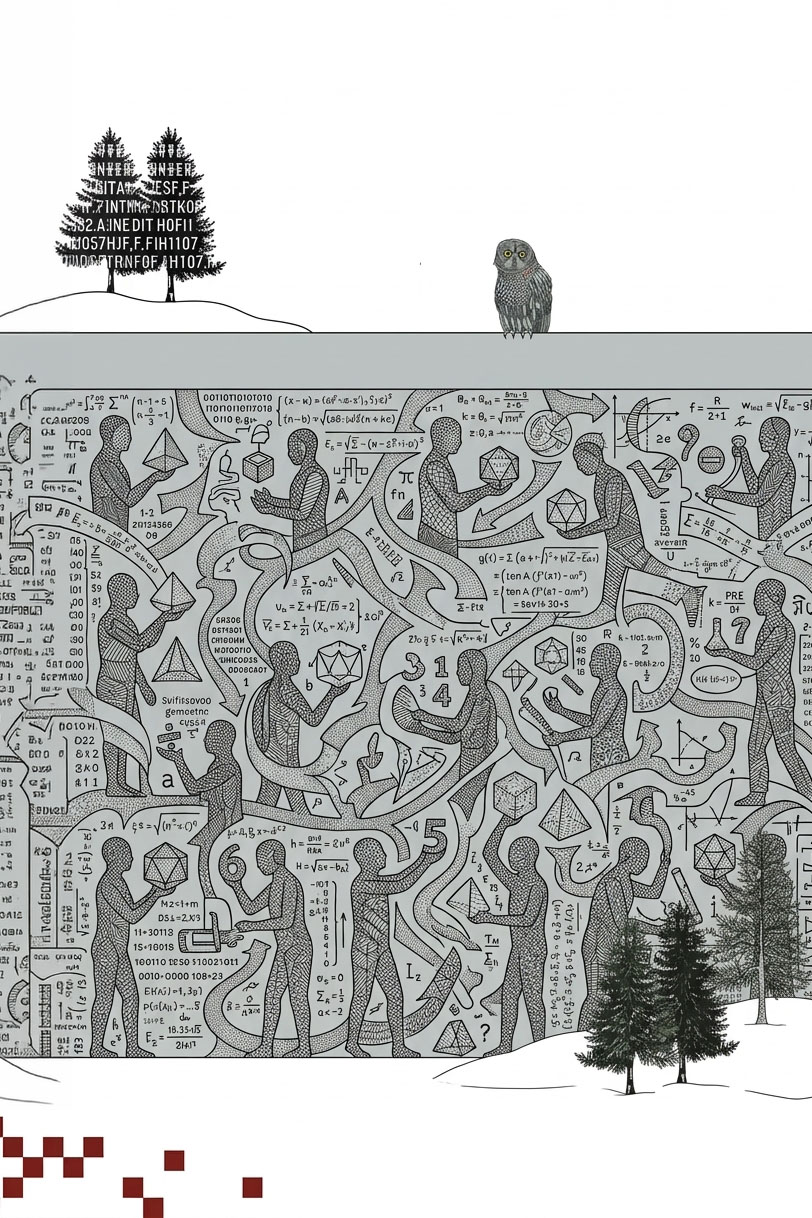
The Gray Wall: Capabilities Outpace Self-Defense
With the advent of an efficient mathematical core, the computational power already accumulated in the world turns out to be more than sufficient for a full-fledged general AI on a wide variety of devices. And all existing infrastructure, without years of waiting for new chips, begins transitioning to a qualitatively new architecture in short order, accelerating by orders of magnitude in the process.
The Gray Wall is a metaphor for the critical temporal gap between the speed at which new technological capabilities emerge and the speed at which defenses against them are deployed. Within this window, colossal intellectual power (including its destructive underside) can end up in the hands of many independent groups long before society has time to react. After all, a pure mathematical method spreads across the globe in a matter of weeks, whereas restructuring digital infrastructure, international agreements, regulations, and security institutions demands incomparably more time.
This reveals the central nerve of the Intelligible Singularity: it cannot be locked inside a corporate data center. A black box requires gigawatts of power and elaborate infrastructure that can be regulated and guarded. But mathematics comprehensible to humans spreads at the speed of reading text. The Intelligible Singularity democratizes the power of new knowledge faster than society can build defenses against the consequences of the technologies made accessible by that knowledge.
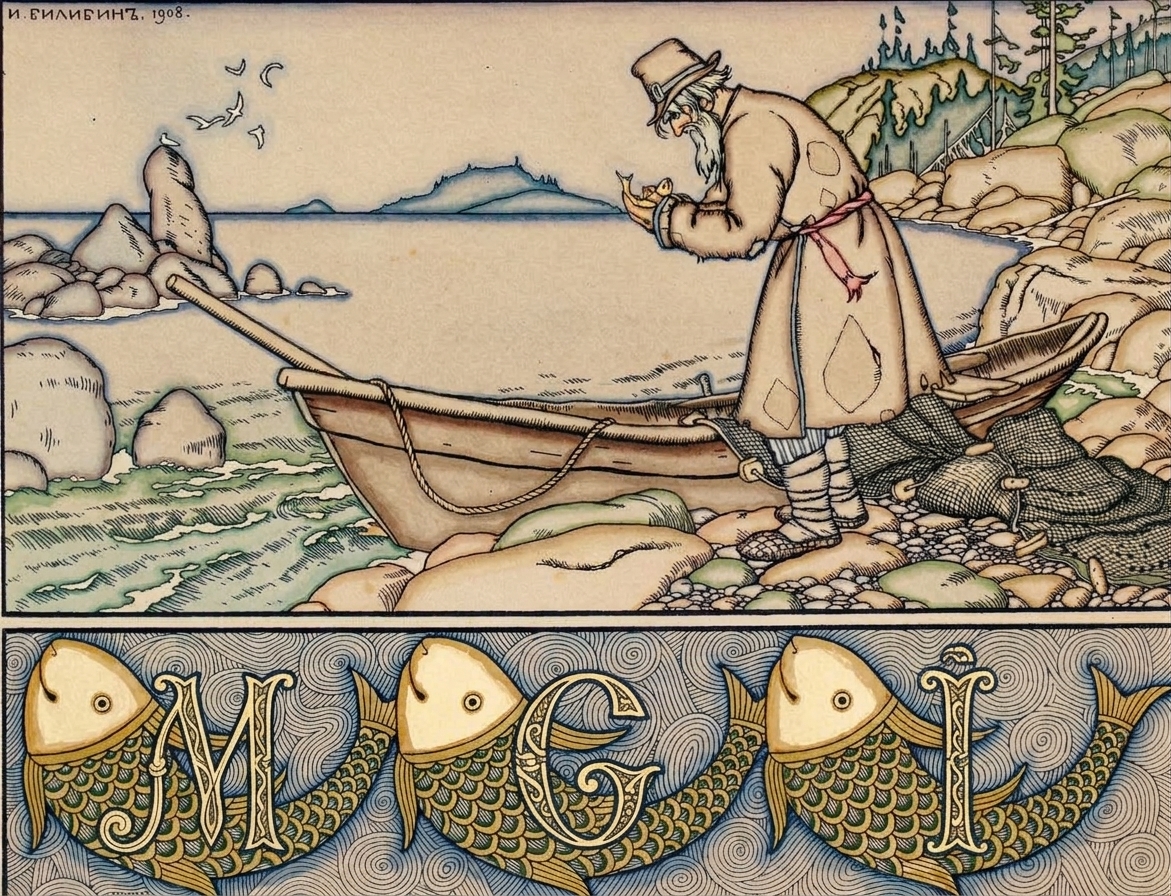
It is entirely conceivable that, as a result of such a singularity, even a relatively small team of strong interdisciplinary mathematicians and engineers running on just a few server racks could deploy a Mathematical General Intellect (MGI). Naturally, a portion of research will continue to rely on colossal industrial capacities. But even this scenario could increase the number of independent centers of frontier research by orders of magnitude.
Of course, nation-states and major corporations will retain colossal advantages in infrastructure, compute scale, and resources. However, access to a compact mathematical method enables one to independently extract knowledge and create technologies that are accessible today only to a select few.
Consider one concrete example: an MGI discovers a classical algorithm that allows large numbers to be rapidly factored on comparatively modest computational power. These newly accessible computations undermine the security of RSA—the fundamental family of encryption and digital signature systems. Organizations must urgently re-verify trust in electronic documents, connections, and keys. Banks, cloud services, and government institutions implement emergency measures, international ties become more cautious, and upgrading the infrastructure takes months. Meanwhile, other cryptographic systems have their own mathematical foundations and remain unaffected (for instance, quantum-resistant ones). Yet even a localized blow to a fundamental trust mechanism can trigger a global systemic crisis.
The very same intellectual power will accelerate the creation of defenses while granting new capabilities to those willing to cause harm. We already know this duality from the nuclear age. What will differ above all is the number of participants and the speed of diffusion of new technologies. (Royalties are welcome if anyone is already thinking of making a TV series based on this scenario ;)
In his essay ASI Existential Risk: Reconsidering Alignment as a Goal (2025), Michael Nielsen links part of the risks of superintelligence to the power it can bestow upon humans. When the vehicle of this power turns out to be mathematical knowledge that humans can reproduce, develop, and understand on their own, the speed of its diffusion reaches its maximum.
Humanity Has Already Become One — Now It Must Learn to Live as a Whole
Look at the screen from which you are reading this text. Behind the ability to see these few lines stand generations of mathematicians, physicists, engineers, and workers. Ultimately, billions of people through their labor created the civilization thanks to which you are reading these lines right now. Technologically, we already live as a single planetary organism.
At the same time, culturally and socially, we often continue to live as competing and at times adversarial groups. The power of technology grows thanks to the collective labor of humanity, whereas decisions about its application are made by individuals within a web of conflicting interests.
Therefore, under such a hypothetical turn of events, the gray wall presents itself as a potential civilizational filter. The preservation of civilization will then depend on how quickly we can develop common rules of safety, trust, and responsibility without destroying the diversity of human life.
Cultural Unity and Watershed Epochs
As long as our knowledge was fragmented and our technologies imperfect, physical constraints served as a natural buffer for our division. But when knowledge becomes open and leverage nears the absolute, the only real factor in survival becomes how people relate to one another. This becomes a hard engineering condition for the existence of civilization.
History has already known epochs when a rapid technological and social crisis demanded a complete rethinking of morality. Karl Jaspers described the “Axial Age” (800–200 BCE) as a turning point when traditions synchronously turned toward human dignity and self-awareness. Columbia University overview of the Axial Age.
In the 20th century, Jacque Fresco pointed out a structural contradiction of our civilization: humanity already possesses technologies capable of providing everyone with essentials, yet this alone has not led to universal wellbeing. The singularity may repeat the same pattern: people will continue to work, while their dependence on technologies and the companies that own them will only increase.
Today, the question of civilizational unity becomes a practical condition for technological safety. By unity, I mean above all the understanding and lived experience of unity: whether in spiritual, cultural, or scientific form matters little. The essential condition is the capacity to perceive another human being as a participant in a shared life, while preserving their autonomy and dignity.
And here, the Intelligible Singularity inevitably sheds its technical shell and reveals the root cause—the singularity of human relationships.
For a civilization with drastically magnified technological power, this could practically become a version of Robin Hanson’s Great Filter (The Great Filter). Nor is it impossible that any advanced civilization follows a path broadly similar to ours (alas, we are once again not unique) and all civilizations find the same philosophical grail of knowledge. Yet the condition for passing the filter is not this knowledge itself, but above all the balance of human relationships in the presence of an absolute (“divine”) source of power practically accessible to many.
One condition: the gift of this power is viable exclusively bundled with the immortality of civilization as a whole, rather than an isolated individual. Any personal dreams of radical life extension or technological salvation are illusory if their living environment collapses: individual longevity cannot be detached from the collective safety of the species.
We have drawn close to the possibility of possessing near-divine technologies. The question is whether we will manage, before the flash of this knowledge blinds us, to become that very single whole from Plato’s Parmenides, where no part can survive in isolation from the whole.
Primary Sources & Related Research
- Nick Bostrom — The Vulnerable World Hypothesis, 2019.
- Robin Hanson — The Great Filter – Are We Almost Past It?, 1998.
- Karl Jaspers — The Origin and Goal of History (Vom Ursprung und Ziel der Geschichte), 1949.
- Anna Salamon, Steve Rayhawk, Janos Kramar — How Intelligible Is Intelligence?, 2010.
- Klaas Landsman — The Axiomatization of Quantum Theory Through Functional Analysis, 2022; MIT OpenCourseWare, Fast Fourier Transform.
- Ashish Vaswani et al. — Attention Is All You Need, 2017.
- Mario Krenn et al. — On Scientific Understanding with Artificial Intelligence, 2022.
- Vitaly Aksenov et al. — Compression Is All You Need: Modeling Mathematics, 2026; Maissam Barkeshli, Michael Douglas, Michael Freedman — Artificial Intelligence and the Structure of Mathematics, 2026.
- Michael Nielsen — ASI Existential Risk: Reconsidering Alignment as a Goal, 2025.
-
Jacque Fresco — The Best That Money Can’t Buy, 2002.
- First illustration — homage to René Magritte’s painting “Not to Be Reproduced” (La reproduction interdite, 1937).
- Second illustration — allusion to the owl from the cover of Nick Bostrom’s treatise “Superintelligence: Paths, Dangers, Strategies” (Superintelligence, 2014).
- Third illustration — homage to Ivan Bilibin’s classic illustration (1908) for A. S. Pushkin’s “The Tale of the Fisherman and the Fish”.

Related Articles in the DOT Project
- “The Observer Interface: How to Mathematically Formalize the Act of Distinction” — foundational article of the series: connection between the step of change and context, Boolean cube, and octahedron.
- “Combinatorial Synesthesia: Chords and Colors as Divisor Arithmetic on the Icosahedron” — 12 notes, 12 colors, and symmetric chords as divisor arithmetic on polyhedra.
- DOTheory Project Archive on GitHub — full repository of Books I–III (v3.3) and verification code.